00 Foundations
Branching ratio and partial activity
Partial emission rate A_i = A × BR_i × n_i for photons, β or α of a given branch.
Listen
Listen · English
Simulation
Branching ratio and partial activity — Change the numbers; the scene follows.
Where it works
Hot lab
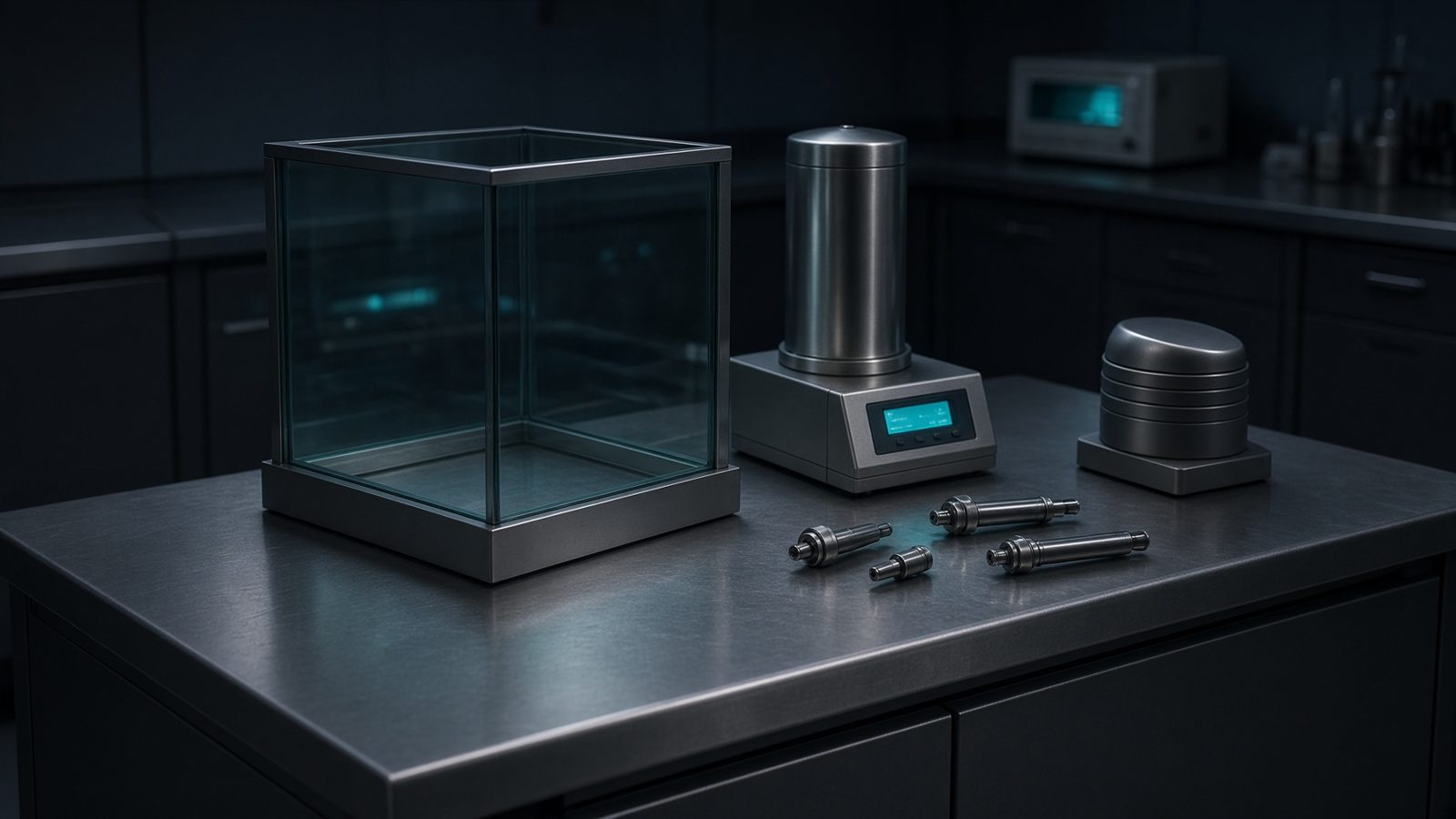
Dose calibrator
In the dose calibrator well — assayed activity, decay between two times, Marinelli.
Open this machineFormula
Typical values
Variables
Results
A_i
Partial activity
325.6MBq
ṅ
Emission rate
3.256e+8s⁻¹
Explanation
What it means
Almost no radionuclide emits a single radiation. ⁹⁹ᵐTc: 88% 140 keV γ (the imaging photon), internal conversion and a few other lines. ¹⁸F: 97% β⁺ (hence 194% of 511 keV annihilation photons per decay) and 3% EC. Dose constants, gamma constants and imaging yields always fold in the branching ratio. This is a working relation in Radiation physics.
Where it is used
Clinically it sits on the Hot lab — Dose calibrator. In the dose calibrator well — assayed activity, decay between two times, Marinelli. Radiation physics lives at the x-ray target, the linac head, and inside the patient: how a photon is born, how it scatters, and how it dies. Use these relations before you trust a spectrum, a wall, or a kV-versus-MV contrast argument.
Hot lab · Open this machineHow to use it
Enter total activity, branching ratio (0–1) and emissions per decay n (2 for annihilation). Read the partial activity and the photon emission rate. For PET n=2 and BR=β⁺ fraction. Change one input and watch the curve and the simulation follow.
Symbols
- ATotal activity370 MBq
- BRBranching ratio0.88
- nEmissions per decay1
Worked example
A typical case from the default values: A = 370 MBq (Total activity); BR = 0.88 (Branching ratio); n = 1 (Emissions per decay). Substituting into the relation gives A_i = 325.6 MBq; ṅ = 3.256e+8 s⁻¹. These are teaching numbers — align them with your machine.
Typical values give
- A_i = 325.6MBq
- ṅ = 3.256e+8s⁻¹
Where it comes from
The displayed formula is the working relation. Partial emission rate A_i = A × BR_i × n_i for photons, β or α of a given branch. Usual reference: ICRP 107 / Cherry. Derive it in the specialty lesson, then return here to pin the numbers.
Reference: ICRP 107 / Cherry
Assumptions & limits
Single line. Does not build a full decay scheme, nor include internal-conversion electrons or x-ray fluorescence that follow EC/IT.
Pitfalls
Do not mix free-electron Compton kinematics with photoelectric-dominated kV imaging. Check keV versus MeV, and never treat a spectrum as one photon. Single line. Does not build a full decay scheme, nor include internal-conversion electrons or x-ray fluorescence that follow EC/IT.
Keep this
Photons do not deposit dose; the electrons they set in motion do. Single line. Does not build a full decay scheme, nor include internal-conversion electrons or x-ray fluorescence that follow EC/IT.
In this specialty