01 Therapy
Paddick conformity & gradient
CI = (TVPIV)² / (TV × PIV) and GI = PIV₅₀ / PIV.
Listen
Listen · English
Simulation
Paddick conformity & gradient — Change the numbers; the scene follows.
Where it works
Linear accelerator
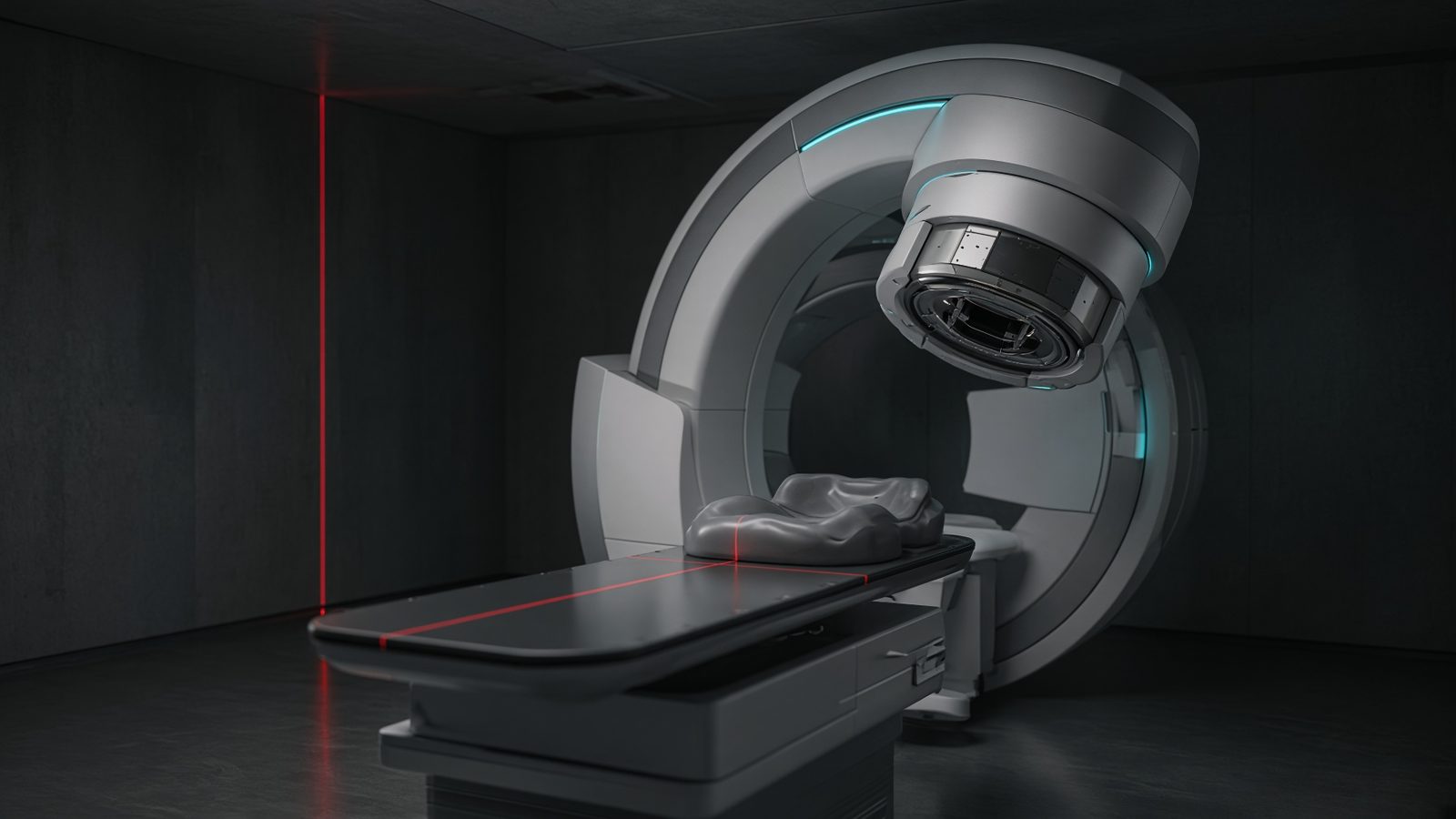
Isocenter
At isocenter, on the central axis through the patient (or a phantom in the same place).
Open this machineFormula
Variables
Results
CI
Paddick CI
0.7872
PIV/TV
RTOG conformity
1.1667
GI
Gradient index
3.4286
Explanation
What it means
Paddick’s conformity index rewards a prescription isodose that covers the target without spilling outside: CI = (TVPIV)²/(TV×PIV). Perfect conformal coverage scores 1. The gradient index GI = PIV₅₀/PIV describes how fast dose falls outside the target — crucial in SRS/SBRT. This is a working relation in Radiotherapy.
Where it is used
Clinically it sits on the Linear accelerator — Isocenter. At isocenter, on the central axis through the patient (or a phantom in the same place). Radiotherapy equations sit at the console and in the bunker: output, depth dose, equivalent square, and the monitor units that treat the patient. Hand-calc them beside the TPS, never instead of a commissioned plan.
Linear accelerator · Open this machineHow to use it
Take volumes from the TPS DVH: TV (target), PIV (volume inside the prescription isodose), TVPIV (overlap), and PIV50 (50% isodose volume). SRS goals often CI > 0.8 and GI < 3. Change one input and watch the curve and the simulation follow.
Symbols
- TVTarget volume12 cm³
- PIVPrescription isodose volume14 cm³
- TVPIVTarget in prescription isodose11.5 cm³
- PIV5050% isodose volume48 cm³
Worked example
A typical case from the default values: TV = 12 cm³ (Target volume); PIV = 14 cm³ (Prescription isodose volume); TVPIV = 11.5 cm³ (Target in prescription isodose); PIV50 = 48 cm³ (50% isodose volume). Substituting into the relation gives CI = 0.7872; PIV/TV = 1.1667; GI = 3.4286. These are teaching numbers — align them with your machine.
Typical values give
- CI = 0.7872
- PIV/TV = 1.1667
- GI = 3.4286
Where it comes from
The displayed formula is the working relation. CI = (TVPIV)² / (TV × PIV) and GI = PIV₅₀ / PIV. Usual reference: Paddick 2000 / RTOG. Derive it in the specialty lesson, then return here to pin the numbers.
Reference: Paddick 2000 / RTOG
Assumptions & limits
Geometric indices only — they ignore location of spill (brainstem vs fat). RTOG CI = PIV/TV can exceed 1 and does not penalise under-coverage; Paddick does.
Pitfalls
Never mix PDD from one SSD with TMR from another without converting. Field size at the surface is not the size at isocentre. A hand MU is a check, not a treatment. Geometric indices only — they ignore location of spill (brainstem vs fat). RTOG CI = PIV/TV can exceed 1 and does not penalise under-coverage; Paddick does.
Keep this
Name the SSD, energy, and field size with every PDD or TMR you quote. Geometric indices only — they ignore location of spill (brainstem vs fat). RTOG CI = PIV/TV can exceed 1 and does not penalise under-coverage; Paddick does.
In this specialty