01 Therapy
Electron range rules of thumb
Rp ≈ E/2, R90 ≈ E/3.2, R80 ≈ E/2.8, R50 ≈ E/2.33 (cm, MeV, water).
Listen
Listen · English
Simulation
Electron range rules of thumb — Change the numbers; the scene follows.
Where it works
Linear accelerator
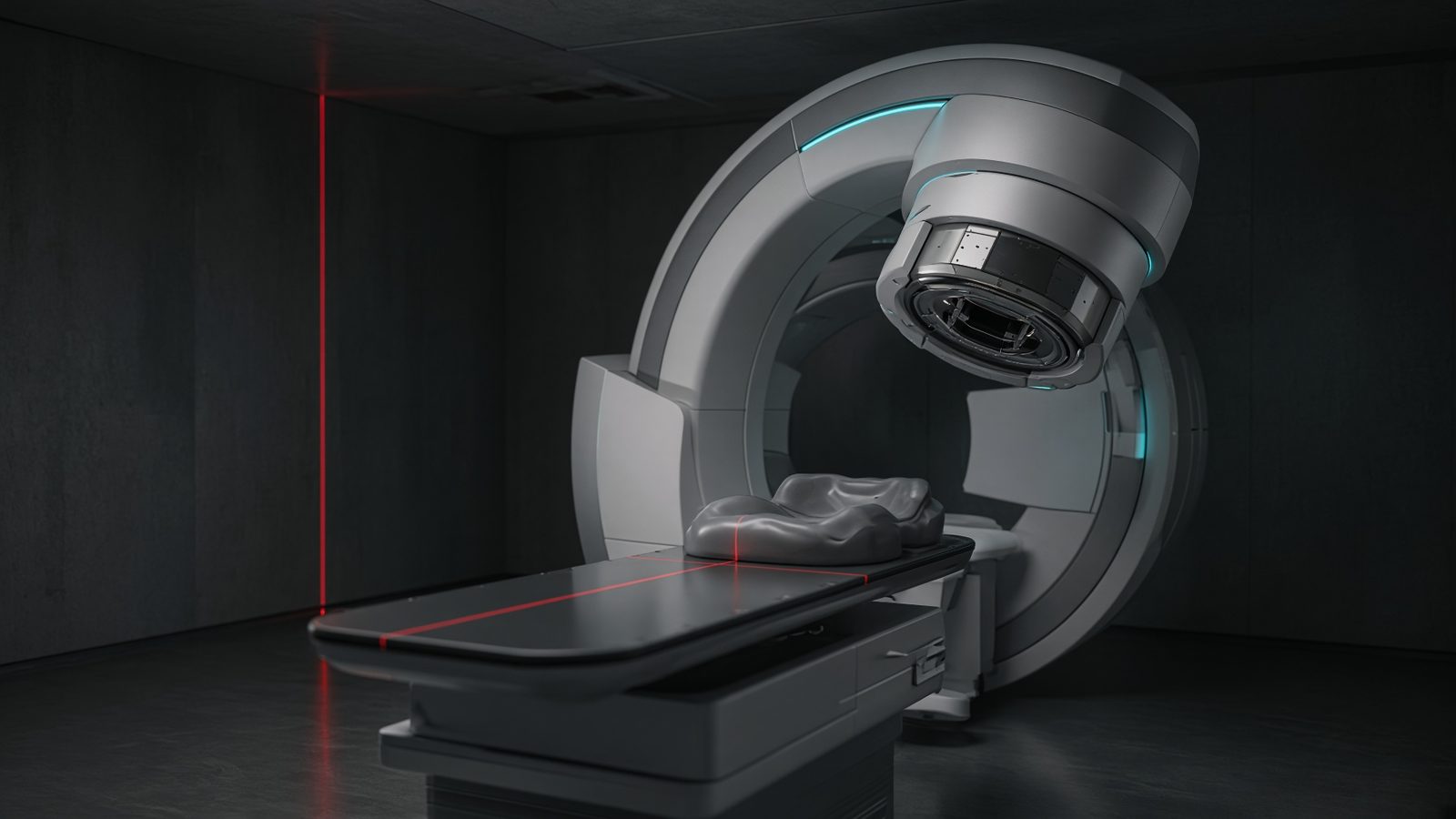
Isocenter
At isocenter, on the central axis through the patient (or a phantom in the same place).
Open this machineFormula
Variables
Results
R_p
Practical range
4.5cm
R_90
90% depth
2.8125cm
R_80
80% depth
3.2143cm
R_50
50% depth
3.8627cm
d_max
Approx. dmax
1.87cm
Curve
Explanation
What it means
Clinical electron beams in water follow robust rules of thumb: practical range Rp ≈ E/2 cm, therapeutic 90% range ≈ E/3.2 cm, and R50 ≈ E/2.33 cm, with E the most-probable energy at the surface in MeV. They come from the nearly linear CSDA range of 5–20 MeV electrons. This is a working relation in Radiotherapy.
Where it is used
Clinically it sits on the Linear accelerator — Isocenter. At isocenter, on the central axis through the patient (or a phantom in the same place). Radiotherapy equations sit at the console and in the bunker: output, depth dose, equivalent square, and the monitor units that treat the patient. Hand-calc them beside the TPS, never instead of a commissioned plan.
Linear accelerator · Open this machineHow to use it
Pick the energy so that R90 covers the distal PTV (often 90% at the distal target edge, with bolus if needed). Example: 9 MeV → R90 ≈ 2.8 cm, Rp ≈ 4.5 cm. Confirm on your measured PDD — cone size and SSD shift the curve. Change one input and watch the curve and the simulation follow.
Symbols
- ENominal energy9 MeV
Worked example
A typical case from the default values: E = 9 MeV (Nominal energy). Substituting into the relation gives R_p = 4.5 cm; R_90 = 2.8125 cm; R_80 = 3.2143 cm; R_50 = 3.8627 cm; d_max = 1.87 cm. These are teaching numbers — align them with your machine.
Typical values give
- R_p = 4.5cm
- R_90 = 2.8125cm
- R_80 = 3.2143cm
- R_50 = 3.8627cm
- d_max = 1.87cm
Where it comes from
The displayed formula is the working relation. Rp ≈ E/2, R90 ≈ E/3.2, R80 ≈ E/2.8, R50 ≈ E/2.33 (cm, MeV, water). Usual reference: Khan / AAPM TG-25. Derive it in the specialty lesson, then return here to pin the numbers.
Reference: Khan / AAPM TG-25
Assumptions & limits
Water, standard cones, SSD 100 cm. Bone, lung, oblique incidence, and small cutouts change the ranges. Energy here is nominal/most-probable, not mean energy at dmax.
Pitfalls
Never mix PDD from one SSD with TMR from another without converting. Field size at the surface is not the size at isocentre. A hand MU is a check, not a treatment. Water, standard cones, SSD 100 cm. Bone, lung, oblique incidence, and small cutouts change the ranges. Energy here is nominal/most-probable, not mean energy at dmax.
Keep this
Name the SSD, energy, and field size with every PDD or TMR you quote. Water, standard cones, SSD 100 cm. Bone, lung, oblique incidence, and small cutouts change the ranges. Energy here is nominal/most-probable, not mean energy at dmax.
In this specialty