03 Nuclear
Energy resolution
% resolution = 100 × FWHM / E. NaI 140 keV is ~9–10%; CZT is 3–5%; HPGe < 1%.
Listen
Listen · English
Simulation
Energy resolution — Change the numbers; the scene follows.
Where it works
PET/CT
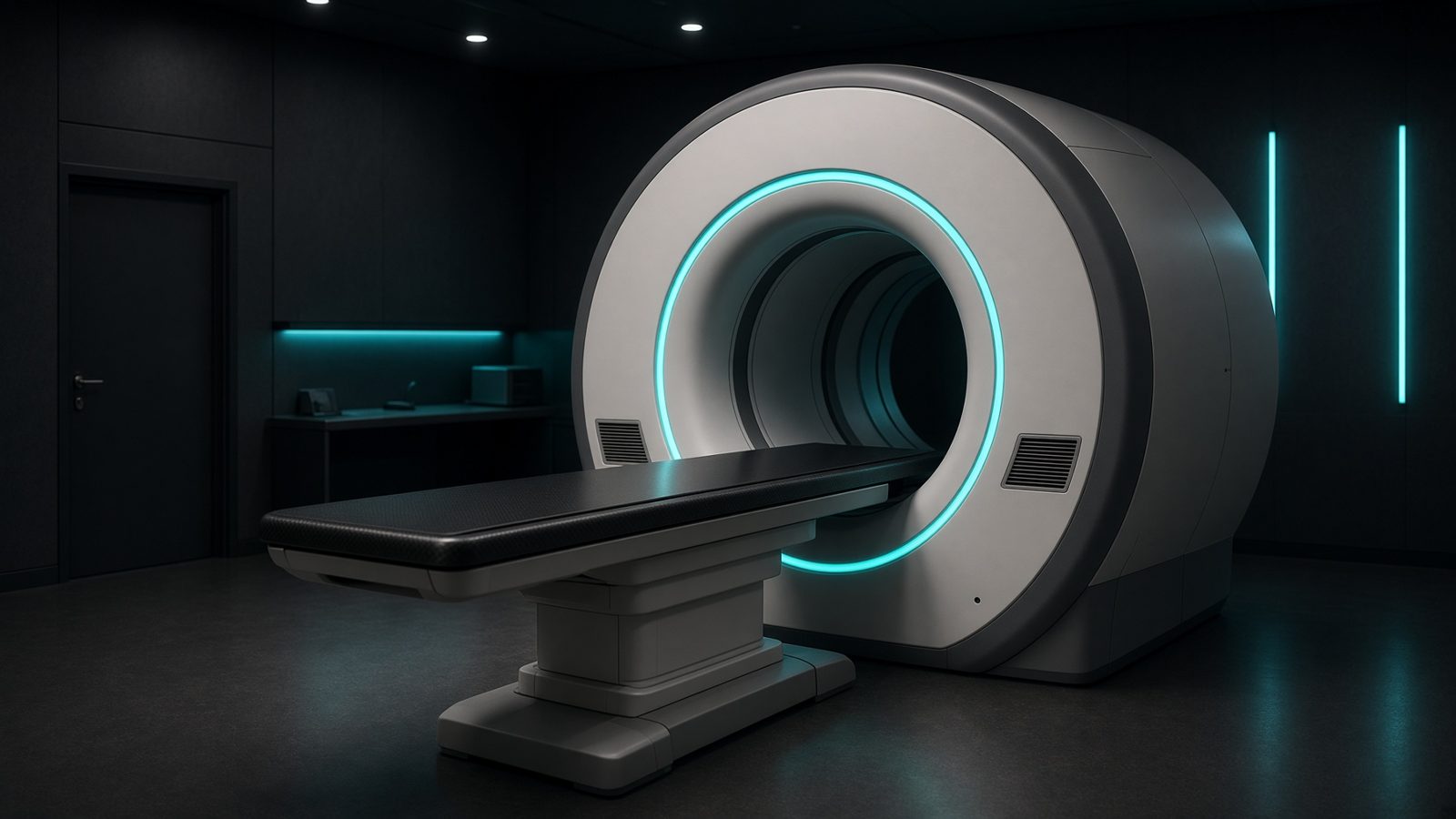
PET detectors
In the PET detector ring — coincidence timing, noise-equivalent counts, randoms.
Open this machineFormula
Typical values
Variables
Results
R
Energy resolution
10%
±10%
20% window width
28keV
Explanation
What it means
Scintillator energy resolution is set by photoelectron statistics (and intrinsic scintillator non-proportionality). A 9% NaI camera at 140 keV has a 12.6 keV FWHM photopeak, so a 20% window is ±14 keV and still accepts a good fraction of Compton-scattered photons. Better resolution (CZT, LaBr₃) lets you tighten the window and reject scatter without losing photopeak counts. This is a working relation in Nuclear medicine.
Where it is used
Clinically it sits on the PET/CT — PET detectors. In the PET detector ring — coincidence timing, noise-equivalent counts, randoms. Nuclear-medicine relations sit in the hot lab, on the camera, and in the voxel: decay, SUV, TOF, and counting statistics. They decide whether an uptake is real or a clock error.
PET/CT · Open this machineHow to use it
Enter photopeak energy and FWHM in the same unit (keV). Read percent resolution and a typical ±10% window width. Presets: NaI Tc-99m, NaI I-131, CZT Tc-99m. Change one input and watch the curve and the simulation follow.
Symbols
- EPhotopeak energy140 keV
- FWHMFull width at half maximum14 keV
Worked example
A typical case from the default values: E = 140 keV (Photopeak energy); FWHM = 14 keV (Full width at half maximum). Substituting into the relation gives R = 10 %; ±10% = 28 keV. These are teaching numbers — align them with your machine.
Typical values give
- R = 10%
- ±10% = 28keV
Where it comes from
The displayed formula is the working relation. % resolution = 100 × FWHM / E. NaI 140 keV is ~9–10%; CZT is 3–5%; HPGe < 1%. Usual reference: Cherry / Knoll. Derive it in the specialty lesson, then return here to pin the numbers.
Reference: Cherry / Knoll
Assumptions & limits
Gaussian photopeak, no tailing from incomplete charge collection (CZT) or escape peaks. FWHM scaling as 1/√E is only approximate once intrinsic resolution dominates.
Pitfalls
Activity is not counts. SUV needs the true injected activity, the residual, and the correct decay time — a clock off by 10 min on ¹⁸F is a several-percent error. Do not compare SUVs across reconstructions. Gaussian photopeak, no tailing from incomplete charge collection (CZT) or escape peaks. FWHM scaling as 1/√E is only approximate once intrinsic resolution dominates.
Keep this
Write the assay time next to every activity. Decay does the rest. Gaussian photopeak, no tailing from incomplete charge collection (CZT) or escape peaks. FWHM scaling as 1/√E is only approximate once intrinsic resolution dominates.
In this specialty