08 Ultrasound
Decibel intensity ratio
dB = 10 log₁₀(I/I₀) = 20 log₁₀(A/A₀). −3 dB is half intensity.
Listen
Listen · English
Simulation
Decibel intensity ratio — Change the numbers; the scene follows.
Where it works
Ultrasound
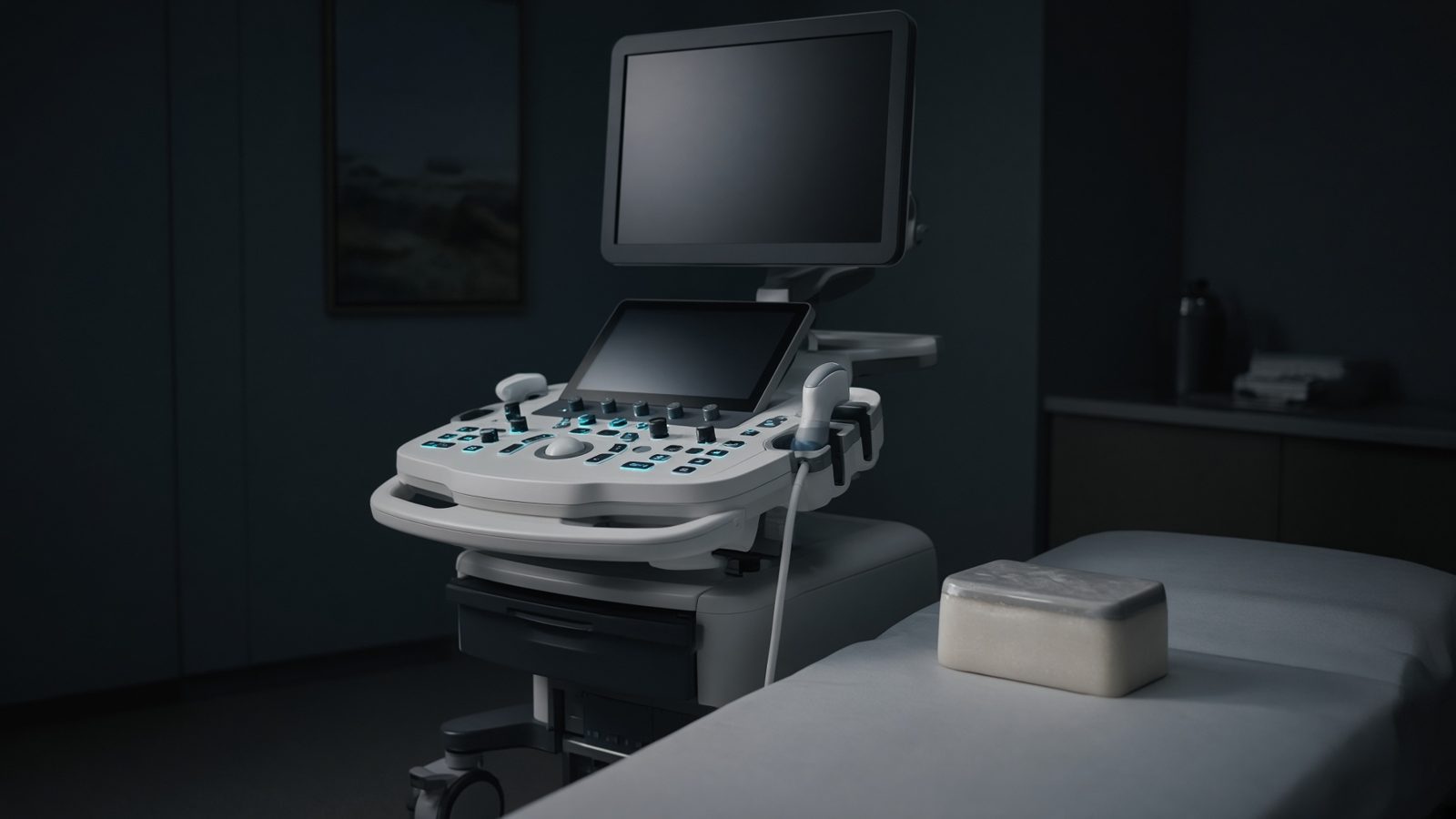
Console
On the console — depth (13 µs/cm), PRF, frame rate, dynamic range, aliasing limit.
Open this machineFormula
Variables
Results
dB
Ratio
-10dB
A/A₀
Amplitude ratio
0.3162
Explanation
What it means
Decibels compress huge intensity ratios: dB = 10 log₁₀(I/I₀) = 20 log₁₀(A/A₀). −3 dB is half intensity; −6 dB is half amplitude; −20 dB is 1% intensity. Dynamic range of a scanner is quoted in dB. This is a working relation in Ultrasound.
Where it is used
Clinically it sits on the Ultrasound — Console. On the console — depth (13 µs/cm), PRF, frame rate, dynamic range, aliasing limit. Ultrasound equations sit on the probe face and along the beam: impedance, Snell, Doppler, MI and TI. They explain why gel matters, why aliasing appears, and why a mechanical index is on the screen.
Ultrasound · Open this machineHow to use it
Enter I and I₀. Attenuation in dB adds, which is why α in dB/cm/MHz is convenient. Never add ratios in percent across a long path — add dB then convert. Change one input and watch the curve and the simulation follow.
Symbols
- IIntensity0.1 a.u.
- I₀Reference intensity1 a.u.
Worked example
A typical case from the default values: I = 0.1 a.u. (Intensity); I₀ = 1 a.u. (Reference intensity). Substituting into the relation gives dB = -10 dB; A/A₀ = 0.3162. These are teaching numbers — align them with your machine.
Typical values give
- dB = -10dB
- A/A₀ = 0.3162
Where it comes from
The displayed formula is the working relation. dB = 10 log₁₀(I/I₀) = 20 log₁₀(A/A₀). −3 dB is half intensity. Usual reference: Edelman. Derive it in the specialty lesson, then return here to pin the numbers.
Reference: Edelman
Assumptions & limits
Log of a power ratio. 20 log is for amplitude (pressure), 10 log for intensity/power. Mixing them is a common error.
Pitfalls
Soft-tissue 1540 m/s is an assumption — not a measurement in that patient. Doppler angle 90° gives no shift. MI and TI are on-screen estimates, not absorbed dose. Log of a power ratio. 20 log is for amplitude (pressure), 10 log for intensity/power. Mixing them is a common error.
Keep this
Gel, angle, and assumed speed of sound — get those three right before you trust a centimetre. Log of a power ratio. 20 log is for amplitude (pressure), 10 log for intensity/power. Mixing them is a common error.
In this specialty