04 Protection
Workload, use and occupancy WUT
W = dose at 1 m × patients × fractions. Design quantity is W U T.
Listen
Listen · English
Simulation
Workload, use and occupancy WUT — Change the numbers; the scene follows.
Where it works
Treatment vault
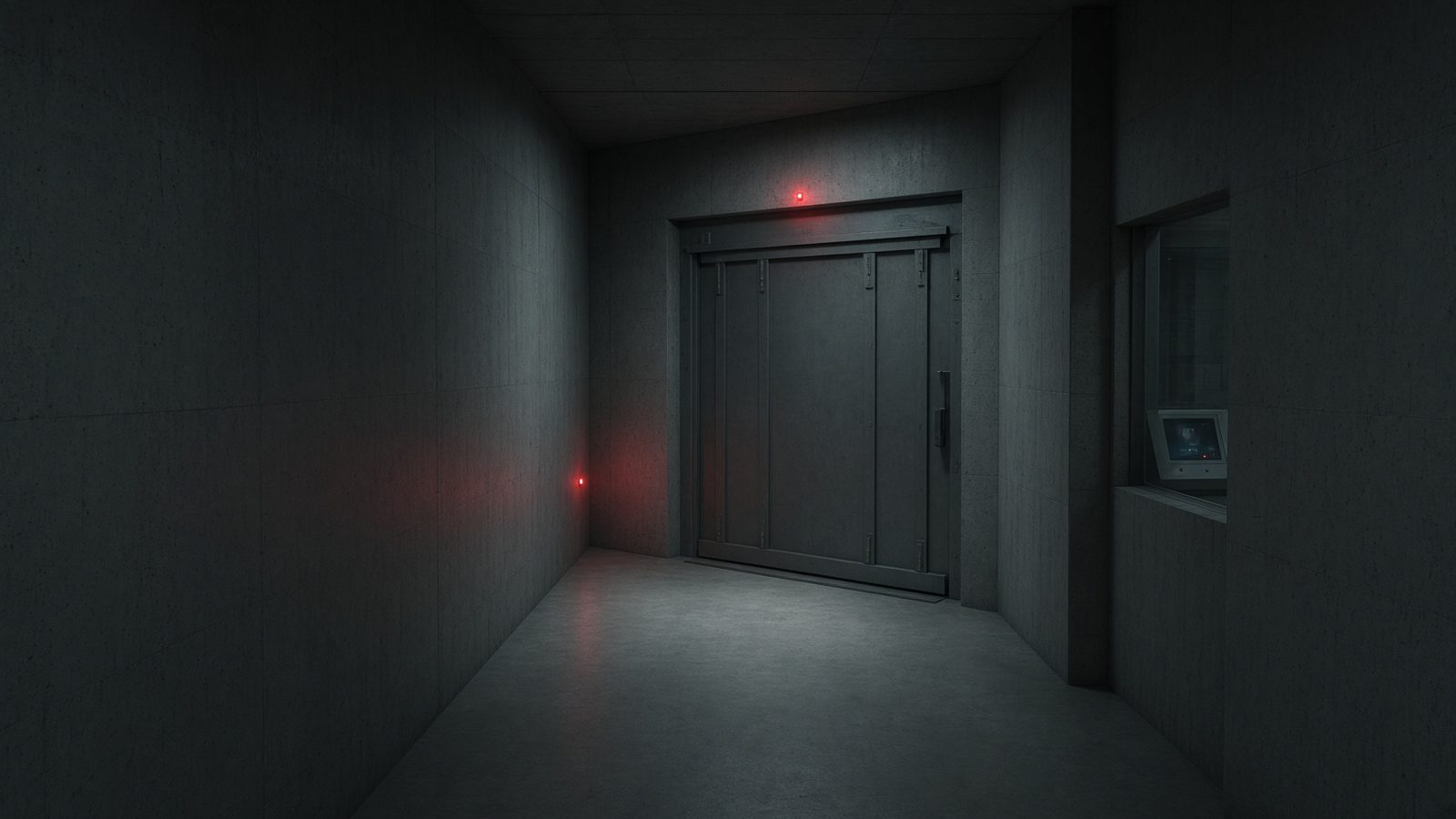
Primary barrier
In the bunker maze and barriers — time, distance, TVL, WUT, and weekly controlled-area dose.
Open this machineFormula
Typical values
Variables
Results
W
Weekly workload
48Gy/week
WUT
Design product
2.4Gy/week
Explanation
What it means
Workload W is the weekly source output at 1 m (Gy/week or mA·min/week). Use factor U is the fraction of time the beam points at this barrier (1 for floors, 0.25 for walls, 1/16 for a rarely used wall). Occupancy T is the fraction of the week a person spends in the area (1 control room, 1/5 corridors, 1/20 outdoor). Shielding thickness is sized so WUT × B / d² ≤ P (weekly design limit). This is a working relation in Radiation protection.
Where it is used
Clinically it sits on the Treatment vault — Primary barrier. In the bunker maze and barriers — time, distance, TVL, WUT, and weekly controlled-area dose. Protection equations are the wall, the occupancy factor, and the badge: time, distance, shielding, and WUT. They turn a room into a legal design.
Treatment vault · Open this machineHow to use it
Enter dose per patient at 1 m, patients per week, U and T. Read W and WUT. A linac at 3 Gy/patient at isocentre, 40 patients, 5 fractions equivalent, U=0.25, T=1/5 is the classic NCRP 151 worked example flavour. Change one input and watch the curve and the simulation follow.
Symbols
- D_1mDose per patient at 1 m1.2 Gy
- NPatients per week40
- UUse factor0.25
- TOccupancy0.2
Worked example
A typical case from the default values: D_1m = 1.2 Gy (Dose per patient at 1 m); N = 40 (Patients per week); U = 0.25 (Use factor); T = 0.2 (Occupancy). Substituting into the relation gives W = 48 Gy/week; WUT = 2.4 Gy/week. These are teaching numbers — align them with your machine.
Typical values give
- W = 48Gy/week
- WUT = 2.4Gy/week
Where it comes from
The displayed formula is the working relation. W = dose at 1 m × patients × fractions. Design quantity is W U T. Usual reference: NCRP 151 / 147. Derive it in the specialty lesson, then return here to pin the numbers.
Reference: NCRP 151 / 147
Assumptions & limits
Does not convert SAD to 1 m (do that first with inverse square). IMRT factor (MU/Gy > 1) must be folded into W. NCRP 151 now prefers a realistic workload survey over the old 1000 Gy/week default.
Pitfalls
Tenth-value layers are for the broad beam in that material and that energy — not a photocopy from another bunker. Occupancy T is not a guess; it is a use pattern. Inverse-square fails against a large scatter source. Does not convert SAD to 1 m (do that first with inverse square). IMRT factor (MU/Gy > 1) must be folded into W. NCRP 151 now prefers a realistic workload survey over the old 1000 Gy/week default.
Keep this
Time, distance, shielding — in that order — then calculate the wall. Does not convert SAD to 1 m (do that first with inverse square). IMRT factor (MU/Gy > 1) must be folded into W. NCRP 151 now prefers a realistic workload survey over the old 1000 Gy/week default.
In this specialty