04 Protection
I-131 patient-release dose
NRC 35.75: release if D(∞) to the public ≤ 5 mSv. D(∞) ≈ 34.6 Γ A₀ T_p E / r².
Listen
Listen · English
Simulation
I-131 patient-release dose — Change the numbers; the scene follows.
Where it works
Hot lab
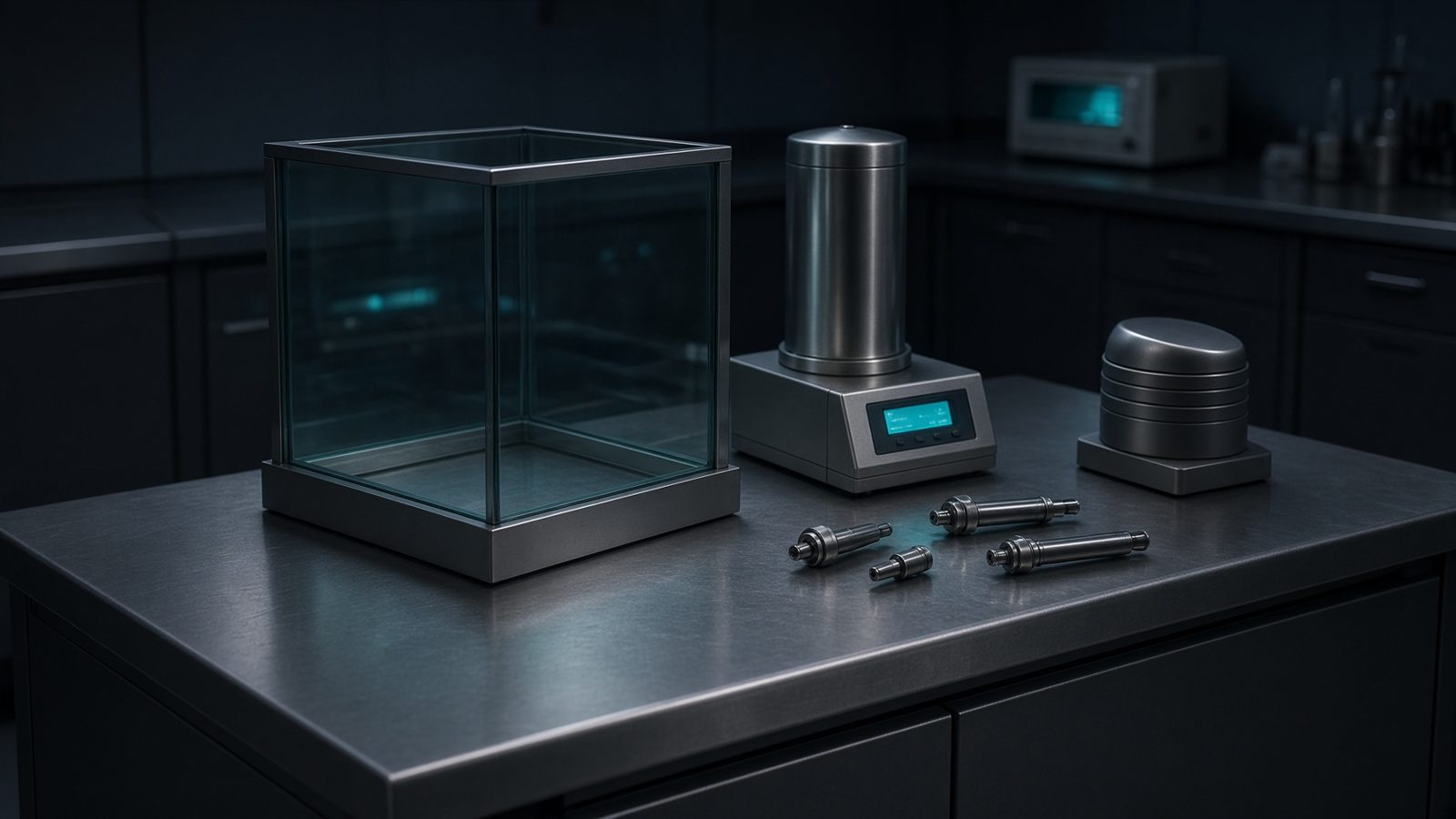
L-block
At the L-block during handling — release limits after a therapy administration.
Open this machineFormula
Variables
Results
D(∞)
Total dose to other person
15.238mSv
limit
Release limit
5mSv
- Exceeds 5 mSv: written instructions and/or hold for decay.
Explanation
What it means
A thyroid-ablation patient is a walking source. NRC permits release when the total dose to any other individual is not likely to exceed 5 mSv, using D(∞) = 34.6 Γ A₀ T_p E / r² with occupancy E ≈ 0.25 at 1 m. The 34.6 converts mR/h × days to mR (24×1.44). Typical release threshold is ~1.2 GBq (33 mCi) if no extra instructions, higher with written instructions and a measured dose rate. This is a working relation in Radiation protection.
Where it is used
Clinically it sits on the Hot lab — L-block. At the L-block during handling — release limits after a therapy administration. Protection equations are the wall, the occupancy factor, and the badge: time, distance, shielding, and WUT. They turn a room into a legal design.
Hot lab · Open this machineHow to use it
Enter administered activity (mCi), physical T½ (d) (8.02 for I-131), occupancy E, distance r (m). Γ_I-131 = 2.2 R cm² / (mCi h) = 0.22 mR m² / (mCi h) in these units — the calculator uses Γ = 2.2 R·cm²/(mCi·h) and r in metres. Change one input and watch the curve and the simulation follow.
Symbols
- A_0Administered activity100 mCi
- T_pPhysical half-life8.02 d
- EOccupancy0.25
- rDistance1 m
- ΓSpecific gamma constant2.2 R·cm²/(mCi·h)
Worked example
A typical case from the default values: A_0 = 100 mCi (Administered activity); T_p = 8.02 d (Physical half-life); E = 0.25 (Occupancy); r = 1 m (Distance); Γ = 2.2 R·cm²/(mCi·h) (Specific gamma constant). Substituting into the relation gives D(∞) = 15.238 mSv; limit = 5 mSv. These are teaching numbers — align them with your machine.
Typical values give
- D(∞) = 15.238mSv
- limit = 5mSv
Where it comes from
The displayed formula is the working relation. NRC 35.75: release if D(∞) to the public ≤ 5 mSv. D(∞) ≈ 34.6 Γ A₀ T_p E / r². Usual reference: NRC NUREG-1556 Vol. 9 / 10 CFR 35.75. Derive it in the specialty lesson, then return here to pin the numbers.
Reference: NRC NUREG-1556 Vol. 9 / 10 CFR 35.75
Assumptions & limits
Regulatory screening formula, not a family-member badge. Ignores biological clearance (using T_p is conservative), shielding by the patient, and actual occupancy. Many clinics measure 1-m dose rate at discharge instead.
Pitfalls
Tenth-value layers are for the broad beam in that material and that energy — not a photocopy from another bunker. Occupancy T is not a guess; it is a use pattern. Inverse-square fails against a large scatter source. Regulatory screening formula, not a family-member badge. Ignores biological clearance (using T_p is conservative), shielding by the patient, and actual occupancy. Many clinics measure 1-m dose rate at discharge instead.
Keep this
Time, distance, shielding — in that order — then calculate the wall. Regulatory screening formula, not a family-member badge. Ignores biological clearance (using T_p is conservative), shielding by the patient, and actual occupancy. Many clinics measure 1-m dose rate at discharge instead.
In this specialty