04 Protection
Stay time
Maximum time to reach a dose limit at a known rate.
Listen
Listen · English
Simulation
Stay time — Change the numbers; the scene follows.
Where it works
Treatment vault
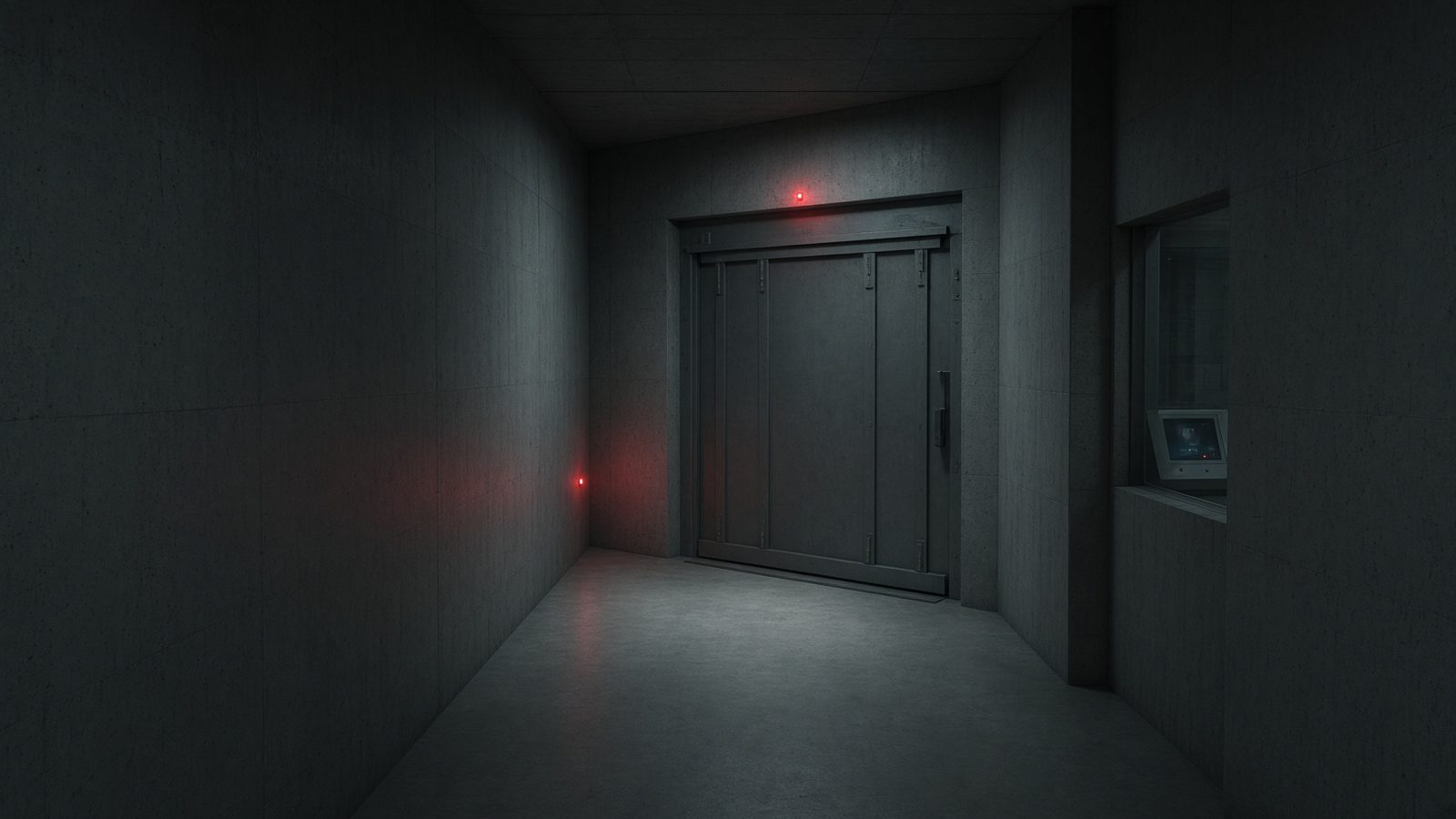
Maze
Along the maze — stay time and inverse-square from the last scatter to the exit.
Open this machineFormula
Variables
Results
t
Stay time
0.2h
t
Stay time
12min
Explanation
What it means
Stay time is dose limit divided by the ambient rate: t = D_lim / Ḋ. It is the clock you give a worker (or a visitor) in a known field, before other controls. This is a working relation in Radiation protection.
Where it is used
Clinically it sits on the Treatment vault — Maze. Along the maze — stay time and inverse-square from the last scatter to the exit. Protection equations are the wall, the occupancy factor, and the badge: time, distance, shielding, and WUT. They turn a room into a legal design.
Treatment vault · Open this machineHow to use it
Public design goal 0.02 mSv/week vs a 0.1 mSv/h field → 0.2 h. Occupational investigation levels are higher. Always add contingency; instruments have uncertainty. Change one input and watch the curve and the simulation follow.
Symbols
- D_limDose limit0.02 mSv
- ḊDose rate0.1 mSv/h
Worked example
A typical case from the default values: D_lim = 0.02 mSv (Dose limit); Ḋ = 0.1 mSv/h (Dose rate). Substituting into the relation gives t = 0.2 h; t = 12 min. These are teaching numbers — align them with your machine.
Typical values give
- t = 0.2h
- t = 12min
Where it comes from
The displayed formula is the working relation. Maximum time to reach a dose limit at a known rate. Usual reference: Health physics practice. Derive it in the specialty lesson, then return here to pin the numbers.
Reference: Health physics practice
Assumptions & limits
Constant dose rate, no self-shielding as the source is approached, no extremity vs whole-body distinction. Hp(10) vs Hp(0.07) may differ for beta fields.
Pitfalls
Tenth-value layers are for the broad beam in that material and that energy — not a photocopy from another bunker. Occupancy T is not a guess; it is a use pattern. Inverse-square fails against a large scatter source. Constant dose rate, no self-shielding as the source is approached, no extremity vs whole-body distinction. Hp(10) vs Hp(0.07) may differ for beta fields.
Keep this
Time, distance, shielding — in that order — then calculate the wall. Constant dose rate, no self-shielding as the source is approached, no extremity vs whole-body distinction. Hp(10) vs Hp(0.07) may differ for beta fields.
In this specialty