04 Protection
Photoneutron TVL (concrete)
n_TVL = log₁₀(Ḣ / P). Concrete TVL for giant-resonance neutrons ~ 20–30 cm.
Listen
Listen · English
Simulation
Photoneutron TVL (concrete) — Change the numbers; the scene follows.
Where it works
Treatment vault
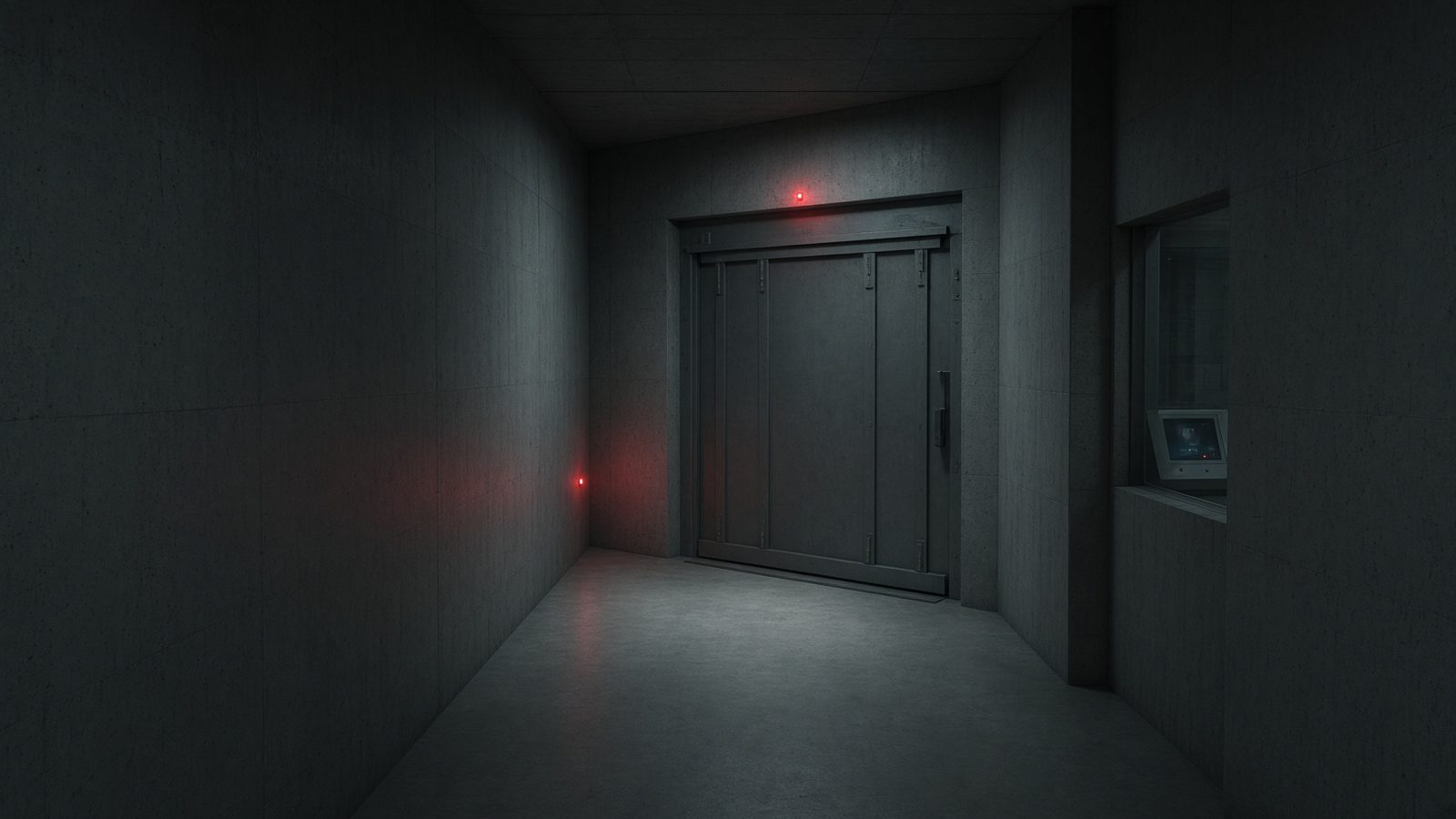
Primary barrier
In the bunker maze and barriers — time, distance, TVL, WUT, and weekly controlled-area dose.
Open this machineFormula
Variables
Results
n_TVL
Number of TVLs
2
x
Concrete thickness
50cm
Explanation
What it means
Above ~8–10 MV the linac grows photoneutrons in the target and jaws (giant dipole resonance). Neutrons do not care about lead — they care about hydrogen (concrete, polyethylene, borated mix). A primary photon wall that is already 2 m of concrete is usually enough for neutrons too; a lead door is not, and needs a hydrogenous core. This calculator turns an unshielded neutron Ḣ into a concrete thickness. This is a working relation in Radiation protection.
Where it is used
Clinically it sits on the Treatment vault — Primary barrier. In the bunker maze and barriers — time, distance, TVL, WUT, and weekly controlled-area dose. Protection equations are the wall, the occupancy factor, and the badge: time, distance, shielding, and WUT. They turn a room into a legal design.
Treatment vault · Open this machineHow to use it
Enter unshielded neutron dose rate at the point (mSv/h), the allowed rate P (mSv/h), and TVL (default 25 cm concrete). Read n and thickness. Typical maze-door neutron Ḣ is tens of μSv/h at 18 MV. Change one input and watch the curve and the simulation follow.
Symbols
- ḢUnshielded rate0.05 mSv/h
- PAllowed rate0.0005 mSv/h
- TVLTenth-value layer25 cm
Worked example
A typical case from the default values: Ḣ = 0.05 mSv/h (Unshielded rate); P = 0.0005 mSv/h (Allowed rate); TVL = 25 cm (Tenth-value layer). Substituting into the relation gives n_TVL = 2; x = 50 cm. These are teaching numbers — align them with your machine.
Typical values give
- n_TVL = 2
- x = 50cm
Where it comes from
The displayed formula is the working relation. n_TVL = log₁₀(Ḣ / P). Concrete TVL for giant-resonance neutrons ~ 20–30 cm. Usual reference: NCRP 151 / IAEA SRS 47. Derive it in the specialty lesson, then return here to pin the numbers.
Reference: NCRP 151 / IAEA SRS 47
Assumptions & limits
Single TVL, no first/equilibrium split, no capture-γ in concrete (which may need a few cm of extra lead on the occupied side). Maze scatter of neutrons is a McGinley-type calculation, not a slab TVL.
Pitfalls
Tenth-value layers are for the broad beam in that material and that energy — not a photocopy from another bunker. Occupancy T is not a guess; it is a use pattern. Inverse-square fails against a large scatter source. Single TVL, no first/equilibrium split, no capture-γ in concrete (which may need a few cm of extra lead on the occupied side). Maze scatter of neutrons is a McGinley-type calculation, not a slab TVL.
Keep this
Time, distance, shielding — in that order — then calculate the wall. Single TVL, no first/equilibrium split, no capture-γ in concrete (which may need a few cm of extra lead on the occupied side). Maze scatter of neutrons is a McGinley-type calculation, not a slab TVL.
In this specialty