04 Protection
Primary-barrier transmission B
B = P d² / (W U T). Then n_TVL = log₁₀(1/B).
Listen
Listen · English
Simulation
Primary-barrier transmission B — Change the numbers; the scene follows.
Where it works
Treatment vault
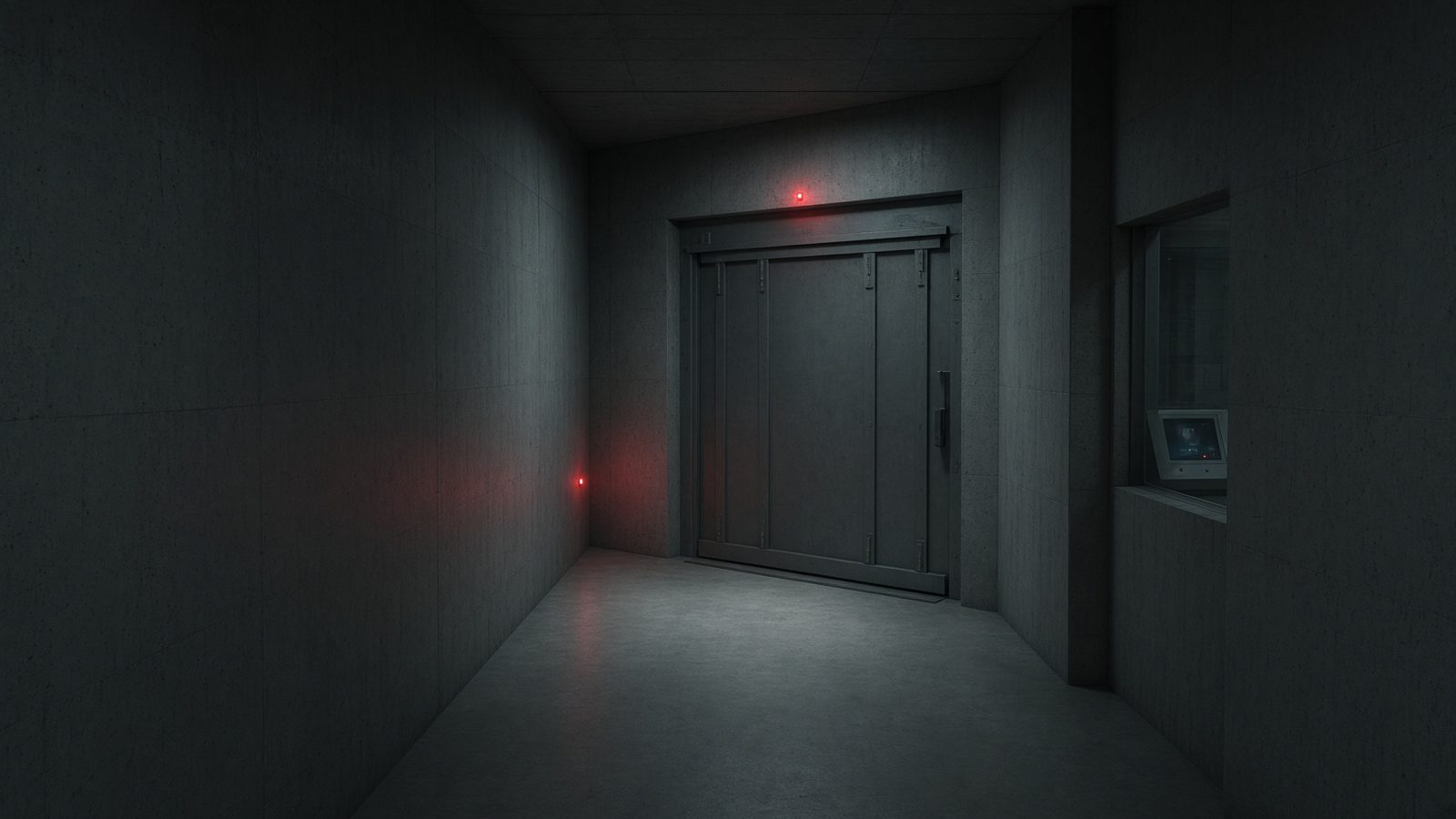
Primary barrier
In the bunker maze and barriers — time, distance, TVL, WUT, and weekly controlled-area dose.
Open this machineFormula
Variables
Results
B
Required transmission
6.0000e-5
n_TVL
Number of TVLs
4.2218
n_HVL
Number of HVLs
14.0247
Explanation
What it means
Rearrange the shielding inequality WUT B / d² ≤ P to find the transmission the wall must provide. Convert B to thickness with the first and equilibrium TVLs of the material at the design energy: x = TVL₁ + (n−1) TVL_e. This is the entire primary-barrier calculation in one line; scatter + leakage is a separate secondary-barrier problem. This is a working relation in Radiation protection.
Where it is used
Clinically it sits on the Treatment vault — Primary barrier. In the bunker maze and barriers — time, distance, TVL, WUT, and weekly controlled-area dose. Protection equations are the wall, the occupancy factor, and the badge: time, distance, shielding, and WUT. They turn a room into a legal design.
Treatment vault · Open this machineHow to use it
Enter weekly limit P (Sv/week — 0.02 mSv/week public, 0.1 mSv/week controlled in many designs), distance d (m), and WUT (Gy/week). Read B and number of TVLs. 1 Gy ≈ 1 Sv for photons. Change one input and watch the curve and the simulation follow.
Symbols
- PWeekly limit2.0000e-5 Sv/week
- dDistance6 m
- WUTWorkload product12 Gy/week
Worked example
A typical case from the default values: P = 2.0000e-5 Sv/week (Weekly limit); d = 6 m (Distance); WUT = 12 Gy/week (Workload product). Substituting into the relation gives B = 6.0000e-5; n_TVL = 4.2218; n_HVL = 14.0247. These are teaching numbers — align them with your machine.
Typical values give
- B = 6.0000e-5
- n_TVL = 4.2218
- n_HVL = 14.0247
Where it comes from
The displayed formula is the working relation. B = P d² / (W U T). Then n_TVL = log₁₀(1/B). Usual reference: NCRP 151 Eq. 2.4. Derive it in the specialty lesson, then return here to pin the numbers.
Reference: NCRP 151 Eq. 2.4
Assumptions & limits
Primary beam only, no scatter, no leakage, no IMRT factor (fold it into W). d is from the isocentre (or the target) to the occupied point, through the barrier. TVL must match the spectrum and the material (lead vs concrete vs steel).
Pitfalls
Tenth-value layers are for the broad beam in that material and that energy — not a photocopy from another bunker. Occupancy T is not a guess; it is a use pattern. Inverse-square fails against a large scatter source. Primary beam only, no scatter, no leakage, no IMRT factor (fold it into W). d is from the isocentre (or the target) to the occupied point, through the barrier. TVL must match the spectrum and the material (lead vs concrete vs steel).
Keep this
Time, distance, shielding — in that order — then calculate the wall. Primary beam only, no scatter, no leakage, no IMRT factor (fold it into W). d is from the isocentre (or the target) to the occupied point, through the barrier. TVL must match the spectrum and the material (lead vs concrete vs steel).
In this specialty